I don't know what a rave is, but I went to one last night. 30 of our youth enjoyed what they always enjoy on Sunday nights - a Bible Study (Ephesians), food, and a great time. One thing I do know - a rave involves black lights, strobe lights, and a lot of fun.
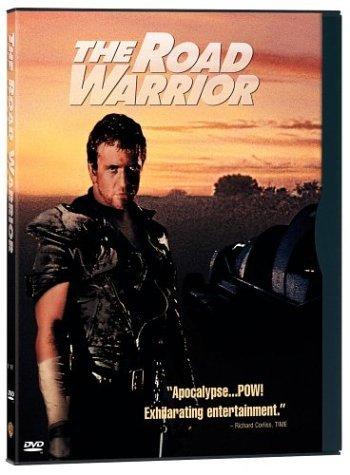
In 1982, the sequel to the Mel Gibson movie "Mad Max" hit theatres. This movie was entitled "Road Warrior" and was set in a post-apocalyptic world where gas was the most scarce and sought after commodity. This movie came to mind today when gas stations locally are out of gas the oil jumped $25 a barrel yesterday. What will gas prices be tomorrow? What about the stock market and AIG? Years ago C.S. Lewis wrote "The Screwtape Letters." "Screwtape" is a (obviously) fictional collection of letters between two demons - one seasoned and the other, a novice. In their correspondence is a lesson on the future. The seasoned demon, Screwtape, advised his novice nephew to cast his "patient's" attention on the future, instead of the present. The future is uncertain and unknowable. Who knows what will happen with gas prices and energy costs? We cannot afford to avoid, however, the present - the here and now. As we are worried about (and rightly so) about our brothers and sisters in Galveston and other hurricane devastated areas and our own futures, we can't forget our own spiritual status right now - our connection with God -right now. How we are treating others - right now. As Jesus reminds us - tomorrow will have it's own worries. Let us live today, in the here and now. Let us pray for those who are suffering. Let us be responsible with our energy. Let us not forget our need for daily bread.
per a request. This is unedited (which means I think faster than I type and what was in my head and what came through my fingers may not always match, be spelled correctly or make grammatical sense).
___
In a few minutes, after the sermon and after the Nicene Creed and after the Prayers of the People, the Confession, and Absolution, we’ll exchange the peace.
Friday morning I had a delightful conversation with some friends and this thing we do – the passing of the peace – came up. And this isn’t the first time that I’ve been asked about the passing of the peace so let me share a little bit about what we are doing and why.
First of all, if this is your first time with us at St Timothy’s and especially if this is your first time in an Episcopal Church, after we have come together and heard the readings and listened to the sermon and said the creed and prayed for the people in the church and the world, and after we have confessed our sins and received absolution, I will say “The Peace of the Lord be always with you,” to which you will say, “And also with you.”
It’s a lot like watching a Stars Wars movie, except we are not saying, “May the Force be with you,” but “the peace of the Lord.”
And then a lot of different things happen. Some folks will turn and face those around them and say “Peace be with you” or “the Peace of the Lord be with you” or simply “Peace.” Some other folks will go up and down the aisles greeting everyone, and typically I stand in the middle and say “Good morning, peace be with you!” which is my nice priestly way of saying, “sit down!”
When I was in the Methodist Church we had fellowship time. I would say “let us greet one another in the name of Christ,” and for five minutes we’d smile and slap people on the backs and glad hand and talk about the football game the day before or the potluck dinner that’s coming as soon as church is over. I know they have this in Baptist and Pentecostal Churches too.
Too many times we are running late to church and we have places to go as soon as it’s over, we’ve got company coming in or there’s a ballgame our kids have to go to, and it’s sometimes impossible to greet people in our church family. But that’s not what the passing of the peace is for.
Nor is the passing of the peace one of those things on our liturgical check list that we have to do. It’s not designed to be cold or informal and it’s really not designed to be a time of catching up either.
The passing of the peace used to be a kiss. In the early church newly baptized members were greeted by everyone by a kiss, not unlike the new baby that is passed around to aunts and uncles at Thanksgiving. Everyone gets to hold the baby and before they pass him down, that little kid gets a kiss on the forehead. The newly baptized, whether they are 6 months old or 60 years old, were passed down to all the spiritual aunts and uncles and before he was passed down, that little kid or very grown up person, received a kiss.
Over time the kiss of peace was exchanged by everyone all the time. It even had a hierarchy. The priest would kiss the altar, the place were Christ’s Body and Blood reside and would then kiss the deacon and the deacon would kiss the sub-deacon, and the sub-deacon would kiss the acolyte, and the acolyte would kiss the first person in the pew and so on until it was all passed down.
Nowadays we don’t typically kiss, we shake hands or nod or make a slight bow, but the point is still the same. Now that we have come together as the Body of Christ, and we’ve heard the readings that proclaim the good news and the reconciliation and peace in Christ, and we’ve heard sermons sharing the application of this peace and we’ve confessed our faith in Christ, prayed for each other and received forgiveness of our sins, we are now called to put all that we’ve heard and proclaimed in action!
It goes back to what Jesus said in the 5th chapter of Matthew’s gospel: “If you are offering your gift at the altar, and there remember that your brother has something against you, leave your gift there before the altar and go; first to be reconciled to your brother, and then come and offer your gift.”
If there is anyone here that we are at odds with, fighting with, or holding something against, we are called to make peace. Before we go to the altar, we are called to make things right.
In the Eastern Orthodox Church, the Sunday before Lent begins, the church gathers together for evening prayer. On this night something incredible happens. Everyone there, including the clergy, goes to everyone in the church – everyone gathered that night – and asks for their forgiveness.
One person stands in front of another and says “Forgive me, a sinner.” The person responds, “God forgives.”
I tried this one time. It wasn’t the Sunday before Lent but it was on Ash Wednesday. After everyone had received the imposition of ashes we all snaked around the church and went to every single person and asked for their forgiveness. Husbands and wives were crying, having the opportunity to say things to each other that their pride would not allow them to do behind closed doors – here in the midst of a Church, forgiveness was taking place, ice was melting and hard feelings and bitterness and resentment was slowly, but surely, being replaced…by peace.
There was one person in that room that did not stand up. No one had to stand up and ask for forgiveness, this was a new and strange thing we were doing on Ash Wednesday and I didn’t expect everyone to participate. But there was just one. I think he thought no one else would stand up either, but when everyone else did, and people were being honest and real and sincere just by saying, “forgive me, a sinner” this one person was so overwhelmed with the need for forgiveness and the need to forgive that he left.
Of all the diseases that Jesus encountered, the one that he addressed the most was the cancer of a hard heart.
Jesus tells a parable about a king who wanted to settle his accounts. There was a slave that owed the king 10,000 talents. The slave could not pay. 10,000 talents was the equivalent of 100 million denarii. The average worker made ONE denarii per DAY! It would take him 100 million years to pay off the debt. The slave pleads with the king and the king forgives him his debt.
When that same slave, the one just forgiven 10,000 talents or 100 million denarii, sees another slave that owes HIM just 100 denarii or a little over 3 months of wages, the slave grabs him by the throat and demands that he pay up.
But the slave could not pay. He didn’t have the money. So he begs for forgiveness and mercy JUST LIKE THE OTHER SLAVE DID TO THE KING. But he would not have mercy and he would not forgive his debt and he threw the debtor into prison.
When the king heard about this he was furious. He seized the slave and asked him, “Should you not have had mercy on your fellow slave, as I had mercy on you?” And the king had the slave tortured until he could pay his debt.
Now first of all, it would be impossible for a slave to have borrowed 100 million denarii, but Jesus wants to get our attention. He is comparing what God has forgiven us to what we are called to forgive others. God has forgiven us 100 million denarii and we are called to forgive 100 denarii.
God has mercifully restored us to new life and we could never even begin to work off our debts, but we are so many times reluctant to forgive the smallest infraction done to us.
If we do not forgive then we are stuck in one place, one time, and with one person. If we refuse to forgive we can never move forward. We are always thinking about, steaming about, complaining about things that happened back then and when we do that we can never fully enjoy and experience the here and now and we cannot look forward to the future.
How can we enjoy a life that has been forgiven when we do not forgive?
Forgiveness is a process. God can forgive and forget in an instant, but we are not God. It takes us time. It takes us time to work through it and gain perspective and to let go. If we refuse to forgive we are refusing to let go. If we refuse to forgive we are allowing other people and other events to have control over our thoughts and feelings, and if someone or something has control over our thoughts and feelings – then we are not free. And if we are not free – we do not have peace.
In a few minutes we’ll pass that peace. In other words, done right and with sincerity, we’ll pass forgiveness. We’ll pass freedom.
And the hope is that we’ll take the peace, the freedom, the forgiveness and spread it beyond the people in the pews in front of us, beside us and behind us. The hope is, and the call from Christ is, that we’ll take it to our homes and to our jobs and to our friends and to strangers. The hope is that we’ll always remember the unpayable debt that has been forgiven us – and that we’ll not pay it back – but pay it forward.
Yesterday we had our first "After Mass Bible Blast." 17 children from St Timothy's stayed after church and we learned about what makes us grow. Jesus frequently talked about seeds, soil, and growth and the children talked about what makes plants grow and what makes us grow - spiritually that is. I had great pictures from the camera but alas, the transfer to the computer is not working. BUT! I do have this one grainy picture from my cell phone of the children decorating planters and filling them with soil and seed.
PS: Below is the unedited version of the sermon from yesterday.
Last week I had a surprise in church. Actually I had two surprises. The first one was that my mother actually brought naked pictures of me to the ECW shower for Cherilyn. Frankly I do not know why pictures of me in my birthday suit are in any way relevant to Cherilyn and the birth of our son.
But the second surprise occurred at the 10:30 service right as I started to read the Gospel. In the back of the church, out of the corner of my eye, I saw Jocelyn Scofield. Now, you don’t know Jocelyn, she’s not from here and before last week I’m not sure if she has ever been in Winston-Salem. And I haven’t seen Jocelyn in almost 20 years. But I remember her well.
You see, in all my years in school, I was sent to the principal’s office one time. And for that one time – Jocelyn was the reason. You have to understand my mother was, and still is, an elementary school principal. She would have weekly conference calls with teachers and principals just to make sure I didn’t have my name on the board or anything remotely considered misbehaving.
But Jocelyn was the reason. In all honesty it wasn’t her fault. We were in Mrs. Risinger’s glass and I was holding a pair of scissors and she had long blonde hair, and one thing led to another, and before I knew I was sitting in the principal’s office with locks of Jocelyn’s long blonde hair between my fingers.
And in that hot seat, sitting in a chair with the lights bearing down on my face, and a principal frowning at me across his desk, and knowing that my mother and father would not find my attempt at cosmetology funny, I wanted and wished so hard to be somewhere else.
There is a great scene in the movie “Forrest Gump.” Do you remember Forrest Gump? The simple Alabama boy who found himself in the most extraordinary situations? Do you remember the scene when Forrest and Jenny, his best friend – just like peas and carrots – took off in the corn fields trying to hide from her daddy?
Jenny wasn’t in school one day so Forrest, being her ‘very best friend’ went to her house to see if she was sick or out of town or whatever. When he walked up to her house Jenny bolted and took Forrest by the hand and together they ran off to the cornfield. Forrest didn’t know it then, but Jenny was trying to avoid her abusive father. All day long she had been cooped up in the house with her father. All day long she had been subject to abuse, and when she saw Forrest, they took off to the cornfields.
When her father heard the screen door slam as Jenny ran outside, he got up from his nap and started looking for her, calling her name, and he started for the cornfield. In an act of faith and desperation, Jenny took Forrest by the hand and they knelt down in the middle of the corn and Jenny prayed.
Do you remember her prayer?
Dear God, make me a bird, so I can fly far; far, far away. Dear God, make me a bird, so I can fly far; far, far away.
Throughout time Jenny’s prayer has also sounded like this: Dear God, if you would just get me out of this. Dear God, help me find a way. Dear God, let this cup pass before me.
St Paul wrote the letter to the Philippians while he was in prison. It is sometimes hard to put the events of Paul’s life in order and we aren’t sure if he was in Rome or if he was in Ephesus or really where he was but we do know he was in prison.
The book of Philippians is one of the prettiest books in the New Testament. It’s in the book of Philippians that we find the Christ Hymn, the song that includes the verses ‘that at the name of Jesus every knee should bend in heaven and on earth and under the earth and every tongue confess that Jesus Christ is Lord to the glory of God the Father.’
But it’s also a book written by a man in prison. It’s written by a man who is chained. It’s written by a man who wishes he was a bird, so he could fly far, far, far away.
At least it seems that way. St Paul tells the Christians in Philippi that he would rather be with Christ – in fact if he had his druthers he would be with Jesus in heaven – but he knew that he needed to keep fighting to help the struggling, new Christian Churches.
St Paul says that he hard pressed between his two options – to be with Christ or to stay in the flesh. And it doesn’t take an advanced theological degree to see that St Paul really, really wants to escape from his present circumstances. He’s in prison. He’s chained. Who knows what might be in store? Who knows what his captors have in store for him?
In fact, some scholars have actually wondered if St Paul is considering taking his own life to escape from his own hardship. He argues with himself until his comes away with the conviction that he needed to stay strong, he needed to stay in the flesh so that he might be of help to the Philippians, the Galatians, the Ephesians, the Romans, and Christians everywhere.
The point is, the two most important figures in our faith both experienced times when their circumstances were so great, the stress was so incredible, they wished to be somewhere else. St Paul wanted to be with Christ and not in a damp, dirty, inhumane cell. Jesus asked God to let his cup pass before him. Dear God, make me a bird, so I can fly far; far, far away.
When I hear St Paul writing to the Philippians and when I remember Jesus in the Garden of Gethsemane, I know that the feelings I have are not just my own. I know that when there are times and there are places and I am with people when the circumstances seem too hard for me to handle, and when the stress feels like it is going to break me.
We all can nod in agreement with that. We’ve all had times when money or family or work or sickness or those inner demons pile on our souls to the point that we scream for an escape – and sometimes we do destructive things hoping we might escape.
But the most unique thing about our faith is that we don’t have a God who simply tells us how to handle our stress. We have a God who actually showed us.
Christ carried his cross. St Paul labored until he was executed. Neither one was delusional. Neither one had any misconceptions about what faced them ahead. And at their weakest point – they show us God’s immense strength.
Isn’t that funny to say? That at our weakest point, the point where we are the most vulnerable, where we are the most wounded – that we are also at our strongest?
At the 1992 Olympic Games in Barcelona, British sprinter Derek Redmond tore his hamstring in a 200 meter semi-final. He fell to the ground. The hard surface of the track cut in to his skin. His race was over. His Olympics were over. Olympic officials raced over to Redmond and tried to take him off the track, but he brushed them off. He wanted to cross the finish line.
And then he felt the arms of someone familiar around him. It wasn’t an official, it wasn’t another runner, it was his father. His father after watching him fall, ran down the stands, evaded the security guards and put his arms around his son and together they limped to the finish line.
Do you remember watching that scene? No one really remembers who won that race and no one really remembers who won the gold medal that year. Because the strongest person at that race wasn’t the fastest.
The strongest person was the one that at the point of greatest weakness still marched on to finish the race. The fact that in the face of humiliation and disappointment and pain – he kept on fighting moved 65,000 people to their feet cheering him on. At that point the crowd didn’t care about the winner. They didn’t care about a medal. His story is the one we remember.
When we find ourselves in times, places, and people where everything is crashing in and we can’t seem to even stay above water and we wish, we wish with all our might that we could vanish or be whisked away to another place or even another time – let us remember that God’s strength is the most evident when we are at our weakest.
At that even if we do fall down and if the track we are running on does cut and scrape and if our dreams are dashed and our hopes are not realized, God is there to wrap us up in loving arms and walk with us across the finish line.
"Unfortunately we know only too well: the endurance of suffering can upset life's most stable equilibrium, it can shake the firmest foundations of confidence, and sometimes even leads people to despair of the meaning and value of life," - Pope Benedict from the mass at Lourdes, France
This can be hard. On one hand, Christ's suffering is an example to all of us. Pope Benedict's predecessor, John Paul II, famously said as he was ailing and many were calling him to step down, "Christ did not come down from the cross."
On the other hand, it is very hard to watch a loved one suffer and many times methods used to make one comfortable can also speed up death (for instance, Morphine as I understand, reduces pain but also slows breathing).